Skip to main content Skip to navigation

Housing Market Conditions in Tourism-Dependent Municipalities

Overview


The issue of affordable housing has reached crisis levels in communities across the US over the past two decades. Rapid and dramatic increases in real estate prices have outpaced real income for a wide swathe of the population, including in Washington State. These pressures were more intense in places where either natural or cultural amenities provided attractive recreational opportunities.

The Washington State Legislature asked the Metro Center to conduct a comprehensive study on housing market conditions in tourism-dependent municipalities. This study aims to explore various aspects of housing affordability and workforce housing in these unique communities. Key objectives include examining nationwide policies supporting affordable housing, analyzing the correlation between rising area median incomes and housing costs, and assessing the equitable distribution of state housing funds across urban and rural regions. Additionally, the study investigates state policies affecting housing costs in rural areas, identifies strategies to enhance local government revenue flexibility, and evaluates the outcomes of these strategies in supporting workforce housing initiatives.

Project Team

Metropolitan Center for Applied Research and Extension

  • Brad Gaolach, Ph.D., Director, Professor of Community and Economic Development, WSU Extension
  • Martha Aitken, BASW, Assistant Director
  • Jody Norman, MA, MCRP, Urban Extension Specialist

Researchers (listed alphabetically)

  • Mark Beattie, Ph.D., Assistant Professor, School of Hospitality and Business Management, WSU Everett
  • Anthony Gill, Ph.D., Professor, Department of Political Science, University of Washington
  • Gabriella Reznowski, MLIS, Business and Economics Librarian, WSU Pullman
  • Jessica Schad, Ph.D., Associate Professor of Sociology, Utah State University
  • Jennifer Sherman, Ph.D., Professor, Department of Sociology, WSU Pullman
  • Alex Theophilus, Sociology Ph.D. Student, Utah State University
  • Barbara Tolbert, Mayor (2011-2023), City of Arlington, WA

The Metro Center Advantage

Metro Center serves as the conduit between metropolitan decision makers and the research capacity of the university. For this project, the center brought together a team with a broad array of expertise from across the WSU system, partner universities, and municipal government to conduct community-focused research that addressed a critical real-world problem.


Learn More

View the report

Contact Us


No opportunities at this time.

Please check back later or contact Martha Aitken at aitkenm@wsu.edu.


Downtown Arlington; Resilience in the Era of COVID-19

The Need to Adapt

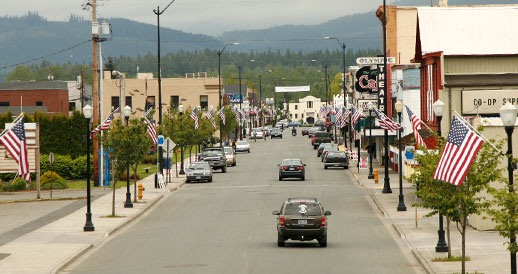
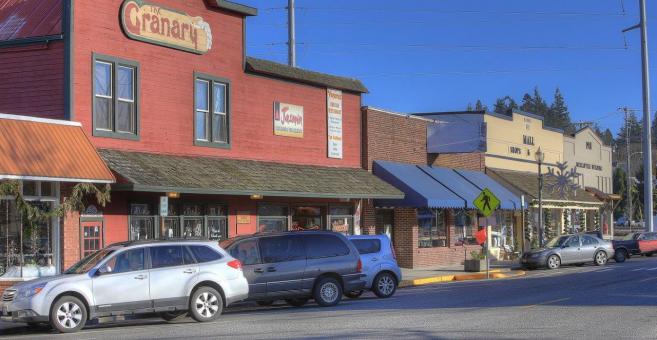
Downtown Arlington, WA (image from www.arlingtonwa.org)

The Metro Center helped the City of Arlington, WA support downtown businesses through the course of the COVID-19 pandemic and the ensuing economic recovery. The project encouraged businesses to be adaptive to ongoing challenges while also addressing customer behavior, the economic reality facing both businesses and customers, and long term community resilience and vision.

COVID-19 has been devastating to many small businesses. Success during this time may rely on a business’s ability to adapt. The City of Arlington, asked the Metro Center to help plan and implement a strategy to support downtown business resilience during and after the COVID-19 pandemic. The Metro Center first designed a survey to assess the needs and strengths of local businesses, including their e-commerce savvy, as they face reduced in-person sales. Working in partnership with the Arlington city government, and the Stilly Valley Chamber of Commerce, the Metro Center has since helped the city design alternative, COVID-friendly strategies for traditional downtown fall and holiday events.  

Online Marketplace

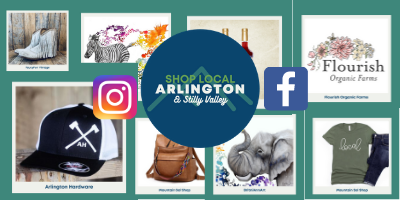
Initial survey data of local Arlington businesses showed that some of the most vulnerable businesses have struggled to embrace e-commerce. To support those businesses and boost sales of those already using social media and online ordering, the Metro Center is helping the city adopt an online marketplace open to all Arlington businesses. The marketplace, www.ShopLocalArlington.com went live in early November.

In addition to communication, marketing and logistical support for the online marketplace, the Metro Center will provide the city with recommendations that encourage the innovation and nimbleness required by merchants to address the inevitable series of changes over the coming months, A detailed analysis of subsequent surveys will gauge the success of these efforts.

The project concluded in early 2021.

Social Media Strategy

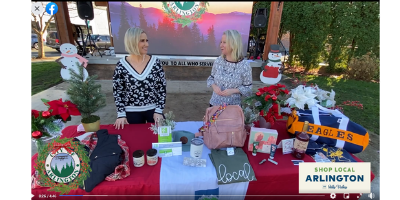
Marketing efforts for this project lean heavily on social media. From video creation to highlight marketplace items and local businesses, to teaming up with a local social media resident influencer – the aim here is to grow and sustain followers across social media platforms. Learn more at www.instagram.com/meetmeinarlington and www.facebook.com/shoplocalarlington.

Project Team

The Metro Center Advantage

The Metro Center previously worked with the City of Arlington and the Town of Darrington on the America’s Best Communities (ABC) project, helping them reach the finalist round. We now bring the local knowledge and strong relationships built during that project, along with expertise in small businesses and survey methodology to support the city once again. 

Metro Center awarded “Innovation & Creativity Award” by National Association of Community Development Extension Professionals

Nat Assoc of Community Development Professionals Award2018 Innovation and Creativity Award:

This award recognizes members who have developed an outstanding effort or program that integrates innovation and creativity in effective community development program design and implementation.

Team Winner:
Metropolitan Center for Applied Research and Extension:
Brad Gaolach, Anthony Gromko, Martha Aitken, Jose Garcia-Pabon, Maria Anguiano, Haley Hughes, and Justin Smith

Washington State University is redefining how Extension works in urban areas with the Metropolitan Center for Applied Research and Extension. The Metro Center engages non-traditional Extension audiences using an innovative business model that focuses on short-term projects instead of long-term programs. Outcome driven, client centered and solution oriented, the Metro Center works to develop practical, place-based solutions by being a conduit between metropolitan decision makers and WSU faculty expertise across the state.

Christina Sanders

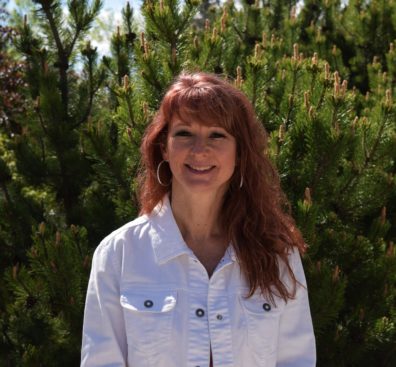
Christina Sanders headshotChristina Sanders (MPA)
Director, Division of Governmental Studies and Services (DGSS)
Phone: 509-335-4811
Email: cmsanders@wsu.edu

Christina has extensive experience working collaboratively with all levels of government: federal, tribal, state and local. Her research interests include emergency management and response, program evaluation, disaster preparedness, and ethics, as well as biased policing, and community-oriented policing. Christina also serves as the Director of WSU’s Office of Emergency Management, is a Community Emergency Response Team trainer, serves as a delegate of the Extension Disaster Emergency Network, and is the Assistant Director of the Washington State Institute for Criminal Justice. Christina and DGSS work on numerous projects with the Metro Center.

Patricia Townsend, Ph.D.

Patricia TownsendPatricia Townsend
Associate Professor
Environment and Community Outreach Specialist
Washington State University
Phone: (425) 357-6020
Email: patricia.townsend@wsu.edu

Dr. Patricia Townsend works with stakeholders throughout the Pacific Northwest on issues related to sustainability, green infrastructure, renewable energy, climate change, sustainable materials, and ecosystem services. Much of her work is determining how to best implement applied research and translating university research for relevant stakeholders. She is a 2018-2019 Urban Green Infrastructure Applied Research Fellow with the Western Center for Metropolitan Extension & Research and often leads Metro Center projects related to sustainable urban systems and the intersection between clothing and textiles and the environment. Collaborators at departments and centers across WSU include AMDT, CEREO, CMEC, CSS, JCDREAM, SoE, and the WA Stormwater Center. Patricia also directs natural resources programs for WSU Snohomish County Extension, which include Beach Watchers, Sustainable Community Stewards, and Promotores del Medio Ambiente.

Patricia has been with WSU since 2012 and started by leading outreach on a USDA NIFA grant, Advanced Hardwood Biofuels Northwest (AHB), which included energy literacy education and stakeholder research. Her work led to connecting growers of poplar trees for ecosystem services with market opportunities. Patricia implemented programs for the Latino community including the needs of Latino agriculture workers. While in graduate school at the University of Washington, Patricia did her dissertation research on tropical forest restoration and conservation in Costa Rica. Prior to that, her career in design led to work in Italy and Peru. Currently, she is happy to be doing research and outreach to help both communities and the environment thrive in the Pacific Northwest. In her free time, Patricia enjoys expanding her urban farm, biking, speaking Spanish, and backpacking, including section-hiking the Pacific Crest Trail in Washington state.

Selective creative work:

Patricia uses her design background and communication skills to create a variety of creative communication products.

Padowski, J. C., S. Breslow, C. Burgess, S.D. Day, B. Gaolach, E. Kolodziej, T. McHolm, K. Moffett, C.J. Schell, P.A. Townsend, J. Davison, K. Gardow, C. Horne, and A. Short-Gianotti. 2019. Report of Sustainable Urban Systems: Building Resilience and Equity into Growing Megapolitan Regions by Greening the Urban Human-Natural System. Workshop, July 30- Aug 1, 2019. https://wpcdn.web.wsu.edu/wp-wsucahnrs/uploads/sites/2158/2019/10/SUS-white-paper-final-Oct-31-2019.pdf.

Townsend, P. A., N. M. Haider, N. M. Hart, B. Nordaker, and K. W. Zobrist. 2013-2019. Advanced Hardwood Biofuels Northwest. http://hardwoodbiofuels.org/.

Haider, N. M., C. Gowan, N. M. Hart, and P. A. Townsend. 2018. AHB Project Overview. Infosheet. https://s3.wp.wsu.edu/uploads/sites/2182/2017/10/Project-Overview-Infosheet.pdf.

Hart, N. M., C. Gowan, K. W. Zobrist, P. A. Townsend, and L. Kongshaug. 2017. The Story of AHB: Laying the Foundation for a Biofuels Industry. http://hardwoodbiofuels.org/video/the-story-of-ahb-laying-the-foundation-for-a-biofuels-industry/.

Haider, N. M, and P. A. Townsend. 2016. Environmental Benefits of Growing Poplar. AHB Policy Maker Briefing Paper. https://s3.wp.wsu.edu/uploads/sites/2182/2016/07/policy-brief_july2016.pdf.

Townsend, P. A., S. Malmstead, T. Miller, J. Smesrud, and B. Nordaker. 2015. Poplar for Recycled Water Reuse and Phytoremediation. http://hardwoodbiofuels.org/video/phytomediation/.

Townsend, P. A., N. M. Haider, S. Kantor, and K. W. Zobrist, K.W. 2014. Everyday Products from Renewable Poplar Trees. https://hardwoodbiofuels.org/videos/everyday-products-from-renewable-poplar-trees/.

Selected academic publications:

Simmons, B., N. M. Hart, and P. A. Townsend. Growing Poplar for Environmental Applications in Washington State. In Press for publication as WSU Fact Sheet.

Townsend, P. A., M. A. Heppenstall, and R. Brooks. Sustainability and Sourcing of Woody Biomass for Industrial Boilers in the Pacific Northwest. In Press for publication as WSU Fact Sheet.

Hart, N. M. and P. A. Townsend. 2020. Biodiesel in the Pacific Northwest. WSU Fact Sheet.

Jayakaran A.D., K. B. Moffett, J. Padowski, P. A. Townsend, and B. Gaolach. 2020. Green Infrastructure in Western Washington and Oregon: Perspectives from a Regional Summit. Urban Forestry and Urban Greening. Vol. 50. https://doi.org/10.1016/j.ufug.2020.126654.

Gowan, C., S. Kar, and P. A. Townsend. 2018. Assessing Washington State Landowner Interest in and Concern toward Growing Bioenergy Crops. Journal of Extension. 56: 2. https://joe.org/joe/2018april/rb2.php.

Gowan, C., S. Kar, and P. A. Townsend. 2018. Landowners Perceptions and Interests in Bioenergy Crops. Biomass and Bioenergy. 110: 57-62. https://www.sciencedirect.com/science/article/pii/S0961953418300217?via%3Dihub.

Hart, N. M., P. A. Townsend, A. Chowyuk, and R. Gustafson. 2018. Stakeholder Assessment of the Feasibility of Poplar as a Biomass Feedstock and Ecosystem Services Provider in Southwestern Washington, USA. Forests. 9(10): 655. https://www.mdpi.com/1999-4907/9/10/655.

Townsend, P. A., N. M. Haider, S. T. Asah, and K. W. Zobrist. 2016. Extension Professionals Concerns, Challenges, and Opportunities in Supporting Biofuel Crop Production in the Pacific Northwest.  Journal of Extension. 54: 6. https://www.joe.org/joe/2016december/pdf/JOE_v54_6rb1.pdf.

Townsend, P. A. and K. L. Masters. 2015. Lattice-work Corridors for Climate Change: A Conceptual Framework for Biodiversity Conservation and Social-ecological Resilience in a Tropical Elevational Gradient. Ecology and Society. 20: 1. http://dx.doi.org/10.5751/ES-07324-200201.


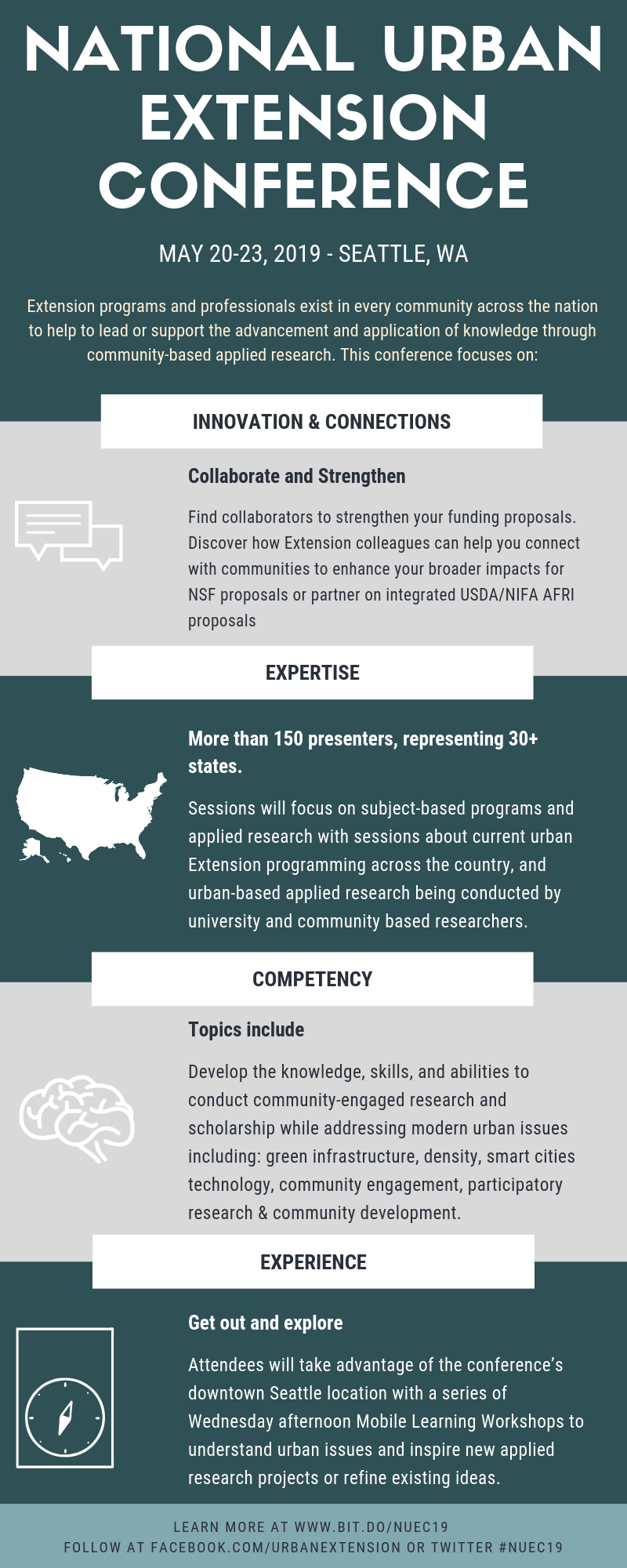
2019 National Urban Extension Conference

Innovation in the City: A Land Grant University Experience

May 20-23, 2019
Motif Hotel – Seattle, WA

Washington State University Extension’s Metro Center was proud to coordinate and host the 2019 National Urban Extension Conference on “Innovation in the City: A Land Grant University Experience,” provided opportunities for Extension professionals from all program areas to share their research and innovative educational strategies that address the needs of urban, suburban, and peri-urban populations as well as urban-rural interdependencies.

The only national gathering of Extension professionals who serve our cities. The conference, highlighted strong urban programming and Extension’s opportunity to support the university-level mission of our land-grant universities in our metropolitan regions. With urban focused sessions, mobile tours, networking opportunities, social events, and exhibits the conference both educated and inspired.

Our Role

Metro Center’s event specialists took charge of this national convening from inception to completion.

Our team scouted locations, managed all aspects of budgeting, advisory, programming, and logistics. This 400+ person event included networking events, a poster session, more than 150 presentations, and ten mobile learning workshops throughout downtown Seattle, WA.

Project Team

Conference Chair

Brad Gaolach, Washington State University

Local Planning Committee

Martha Aitken, Washington State University

Maggie Anderson Fasy, Washington State University

National Planning Committee Members

John Byrnes, Penn State University

Sarah Chvilicek, University of Nevada

Cindy S Davies, New Mexico State University Extension

Kristin Davis, North Carolina State University

Jacqueline Davis-Manigaulte, Cornell University

Julie Fox, The Ohio State University

Willie Howard, University of Kentucky

Misty Layne-Watkins, University of Tennessee

Chris Obropta, Rutgers University

Carol Parker, Cornell University

Brenda Rogers, University of Florida

Joaquina Scott Kankam, Prairy View A&M University

Andree’ Walker Bravo, Utah State University

Karen Wobig, University of Nebraska-Lincoln

DeShana York, University of Alaska Fairbanks

Kamran Zendehel, University of the District of Columbia

Stanwood and Camano Island Community Survey

Overview

The City of Stanwood approached the Metro Center with a request to help them plan and implement a community feedback survey to assist with the city’s strategic planning efforts. The survey distributed to residents of both Stanwood, and residents of Camano Island who pass through Stanwood on their way on and off the island, will gather input about residents’ perceptions of city services and their opinions of future community needs.

Project Background

To implement the project, the Metro Center assembled a project team which included colleagues with the needed expertise at WSU’s Division of Governmental Studies and Services (DGSS). After listening to the city’s needs, the project team developed a ‘menu’ of different approaches for conducting the survey with the strengths, weaknesses and cost of each approach noted, plus additional options for visualizing the results of the survey. The options were discussed with city officials, who made the final decision.

Survey Design

The City of Stanwood will implement two types of surveys:

  • A random sample of 1,500 Stanwood households will receive a mailed, postcard invitation to participate in an online survey.
  • An opportunity survey, which will be widely available to both Stanwood and Camano Island residents via weblink and distributed through local advertising and event channels.

Survey respondents from Stanwood will be asked questions about attitudes toward city government, services, programs and activities. Additional socio-demographic data will permit the project team to make statistical comparisons of responses from population subgroups (e.g. age, sex, race).

Survey respondents from Camano Island will take a shorter version of the Stanwood survey, focused on garnering input on businesses and city services in Stanwood used by Camano Island residents.

When this project concludes in October 2019, the City of Stanwood will be poised to promote and incorporate community input into their strategic planning process.

Project Team

Metro Center Expertise

The Metro Center assembled a team of experts uniquely capable of addressing the project in the following areas:

  • Survey design and implementation
  • Data analysis
  • Data visualization

Learn More

City of Stanwood Metro Center / Stanwood Final Report Metro Center / Stanwood Short Report (abreviated)

Contact Us

WSU Seattle Office
901 5th Avenue, Ste 2900
Seattle, WA 98164 (MAP)

Everett CHART – Assessing Financial Return & Program Effectiveness

Overview

The City of Everett’s Chronic-Utilizer Alternative Response Team (CHART) was designed to address the needs of Everett’s most vulnerable residents who have overlapping health, mental health, legal and substance abuse issues. The Metro Center worked in partnership with the William D. Ruckelshaus Center and the WSU School of Economic Sciences to create an evaluation of the CHART program to gauge its effectiveness and scalability to other areas within Snohomish County.

Analyzing Effectiveness

CHART (CHronic-Utilizer Alternative Response Team) is a team of criminal justice, emergency response, and research partners who collaborate in an effort to reduce the impact of chronic utilizers on health care, emergency services, crisis care, legal and criminal justice systems. By taking a systemic approach, the goal of the program is to create an individualized plan that will have a positive and measurable impact on the use of those resources without simply shifting costs from one partner organization to another. The primary goal of CHART is to decrease the system impacts associated with the disproportionate overlapping service utilization by these individuals; however, it’s anticipated that program efforts will also positively impact the lives of those identified for participation in CHART.

The Metro Center was recruited to develop an evaluation framework and project outcome goals for this program.

Building Consensus & Identifying Outcomes

In October 2018, the Metro Center began working with the City of Everett’s Public Health and Safety Director/Prosecutor and key CHART stakeholders to develop an evaluation framework and build consensus around the CHART program outcomes. In January/February the Center conducted a ‘pre-assessment’ to ascertain CHART stakeholders’ general goals and perceptions of the evaluation project.

The situation assessment included a series of questions designed to elicit history, CHART involvement and scope, alignment of vision and organizations, collaborative potential and relevant data connections to support the noted purpose. The themes and general opinions noted in the linked brief are based on these assessment interview results. The clarity and diversity of comments formed a rich source of opinion that led to fruitful group conversations at an October 7, 2019 convening in Everett.

The summary brief summarizes key themes, specific comments and several suggested Metro Center / Ruckelshaus Center recommendations to form a starting point for discussion.

Project Team

The Metro Center Advantage

Working with the Metro Center allows the City of Everett and CHART stakeholders to access WSU faculty expertise in multiple fields from across the state through a single point of contact. The expertise required for this project includes health economics, evaluation, health policy, facilitation, and consensus building.

Learn More

View the Assessment Summary Brief here. Everett CHART Program Website

Contact Us


SUSTAINABLE URBAN SYSTEMS

Overview

July 30-August 1, 2019 – Talaris Conference Center in Seattle, WA.

Funded by the National Science Foundation, this by-invitation only workshop brought together a select group of 40 experts across an array of disciplines, sectors, and locations to:

  1. identify the key challenges megapolitan regions and their adjacent communities and natural spaces face as urbanization continues,
  2. explore the myriad approaches used in megapolitan regions to address these challenges, and
  3. synthesize this information to identify priority research areas that a research network could promote for improving urban systems sustainability.

Group perspective, knowledge, experience, connections, and collaborative and big-thinking mindset were the greatest asset to this convening.

This was a working conference – attendees not just attended, but rolled up their sleeves and focused on the most critical megapolitan challenges and opportunities. Together, with fellow attendees from academia, industry, government, and non-profits we hope to build new collaborative partnerships and outputs.

SUS Drawing Gallery

Building Resilience and Equity into Growing Megalopolitan Regions by Greening the Urban Human-Natural System

The end products from this conference, to be shared widely across our networks, include:

  1. a white paper to NSF,
  2. a peer-reviewed synthesis journal article
  3. a “Green Print” for working managers and practitioners to help them transition material from the conference into their daily work, and
  4. a scope of work for informing future education and outreach products.

This workshop is funded by a National Science Foundation Sustainable Urban Systems conference grant awarded to Washington State University

Grant Team:

Planning Team:

SUS Convening Final Products

SUS Education & Outreach Scope of Work (updated 10/31/19) SUS White Paper (updated 10/31/19) SUS Greenprint (updated 10/31/19) SUS Convening Participant Agenda SUS Convening Attendee List
National Science Foundation Logo

The National Science Foundation

The National Science Foundation is a United States government agency that supports fundamental research and education in all the non-medical fields of science and engineering. The NSF issued this award for workshops and conferences that explore concepts for advancing Sustainable Urban Systems Research Networks.


2019 Sustainable Urban Systems Conference and Workshop Awards Next Urban Giants NSF Award Abstract

Contact Us

Brad Gaolach
Gaolach@wsu.edu
425-405-1734

WSU Everett
915 N. Broadway
Everett, WA 98201 (MAP)